Blogs
Breaking out of the periphery
July 1, 2019


Madina Kabdualiyeva
Analyst
The geographical location of a city is directly related to the competitive advantages it has. And it is not just about the climate, landscape, and minerals. The environment of the city also determines its direction of development. This is especially noticeable on the map of global cities. It shows three important trends.
1. All global cities are concentrated in certain regions of the world. Western Europe, Northeast Asia, and the East and West coasts of the United States contain the largest number of global cities.
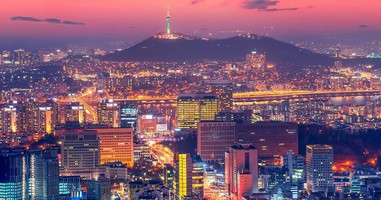
2. Each cluster of cities has a central city. Usually it is a densely populated, rich city that plays an important role not only in its region, but also in the world. These cities are new York, Tokyo, Singapore, London, Shanghai, Paris, Hong Kong, Los Angeles, Beijing, Seoul, Osaka, and Moscow.
3. Other cities of different sizes are located around the central cities, but they are less developed than the centers.
It follows that cities do not develop in isolation from each other, but as a whole, and that the emergence of developed cities is not accidental.
This phenomenon is explained in the "Center - Periphery" model developed by the Nobel Prize Winner economist Paul Krugman. The logic of the model is quite simple.
1. The country has one or more large central cities. Being more developed and attractive, they "pull in" resources from less developed regions - the periphery.
2. By accumulating talents, large cities develop faster and generate innovations that are subsequently transferred to nearby regions. The so-called "Diffusion of innovation" is taking place.
3. As a result, the rise of centers stimulates the country-wide development: the periphery becomes a semi-periphery, and later it can grow into another center.
Let's apply these observations in our context. Kazakhstan obviously does not have even a small cluster of global cities. At the moment, we do not have strong enough magnets, whose influence extends beyond the borders of our country.
Small and medium-sized cities are already acting as the periphery. For example, Uralsk, located close to the Samara-Tolyatti agglomeration, has already assumed this role. The big ones - with populations above 500,000 - are still fighting for their place in the sun. Almaty, which is one of them, is a global city with the highest position in Central Asia, has the greatest potential to become the center of the region, but this is absolutely not guaranteed.
It is necessary to take into account the parallel growth of Tashkent, Urumqi and Tehran, whose population exceeds that of Almaty by at least 2-4 times. In the case of their active development, Almaty is in danger of becoming a periphery. The same risk is likely for other large Kazakh cities close to the border with other countries - Nur-Sultan, Aktobe, Shymkent. Integration processes in the region are no less important: the “One belt, one road" initiative and the EEU directly affect the distribution of the center of gravity in the region.
all publications